
White County Civil Docket Searches
Begin with the court named on the complaint, answer, notice, or calendar. The Superior Court of White County hears broad civil matters, including divorce, equity, adoption, and disputes over title to real property. White County Magistrate Court hears smaller civil claims and several named summary proceedings. Some matters fall within concurrent jurisdiction, so the claim amount alone may not settle the routing question.
PeachCourt is the named provider for covered Superior civil and Magistrate civil electronic filing. Its inspected search route required an account, and Georgia provides no universal statewide public case search. Keep the party names, court, and case number ready. If the electronic route does not show the case or needed document, contact the civil clerk rather than assuming the file does not exist.
- Identify Superior or Magistrate Court from the source paper and case type.
- Use the case number when available, with party names as a second check.
- Try PeachCourt for a covered electronic file or the county calendar archive for a scheduled Magistrate matter.
- Read entries in date order and separate filings, settings, and signed orders.
- Ask the correct clerk for inspection, a plain copy, or a certified order when the online view is incomplete.
White County Civil Court Routes
The civil docket is divided by jurisdiction. Superior Court has general civil power and exclusive authority over specified subjects. Magistrate Court handles claims up to $15,000, statements of claim, garnishments, dispossessory matters, personal-property foreclosure materials, abandoned vehicles, and county-ordinance matters within its authority.
| Route | Common civil work | Access point |
|---|---|---|
| Superior Civil | Divorce, equity, adoption, title, and other general civil cases | Clerk civil division and PeachCourt |
| Magistrate Civil | Claims through $15,000, garnishment, dispossessory, and listed summary matters | Magistrate Office, calendars, and PeachCourt filing |
| Recorded instruments | Deeds, plats, liens, and real-estate indexes | GSCCCA and the recording division |
A recorded deed or lien can relate to a dispute without being the lawsuit docket. Match the court and file type before requesting a copy.
Civil Dockets: What They Show
The July 2026 White County Magistrate civil calendar supplies a concrete field model. Its heading identifies the Magistrate Court, the calendar-call, mediation, and bench-trial purposes, a date and time, page count, and the docket code Civil26. That code labels the calendar category. It should not be treated as the format for every civil case number.
| Case number | The court identifier to give the clerk; the exact countywide format was not exposed. |
|---|---|
| Description | The short case caption or description shown on the civil calendar. |
| Attorney | Counsel of record, or a pro se label when a party appears without counsel. |
| Date filed | The date the matter or initiating paper entered the record. |
| Setting | Calendar call, mediation, bench trial, or another scheduled court event. |
The full register may also include complaints, answers, service returns, motions, orders, judgments, and disposition entries. A calendar row does not prove that the event occurred or show the ruling.
White County Civil Calendar Fields
The official White County calendar is a date-centered view, not a complete electronic register. It can show comments, case number, description, attorney status, and date filed. The heading explains why those cases are assembled for that session.
The Magistrate Court Services source connects readers with civil rules, costs, filing, post-judgment services, and case-type resources.
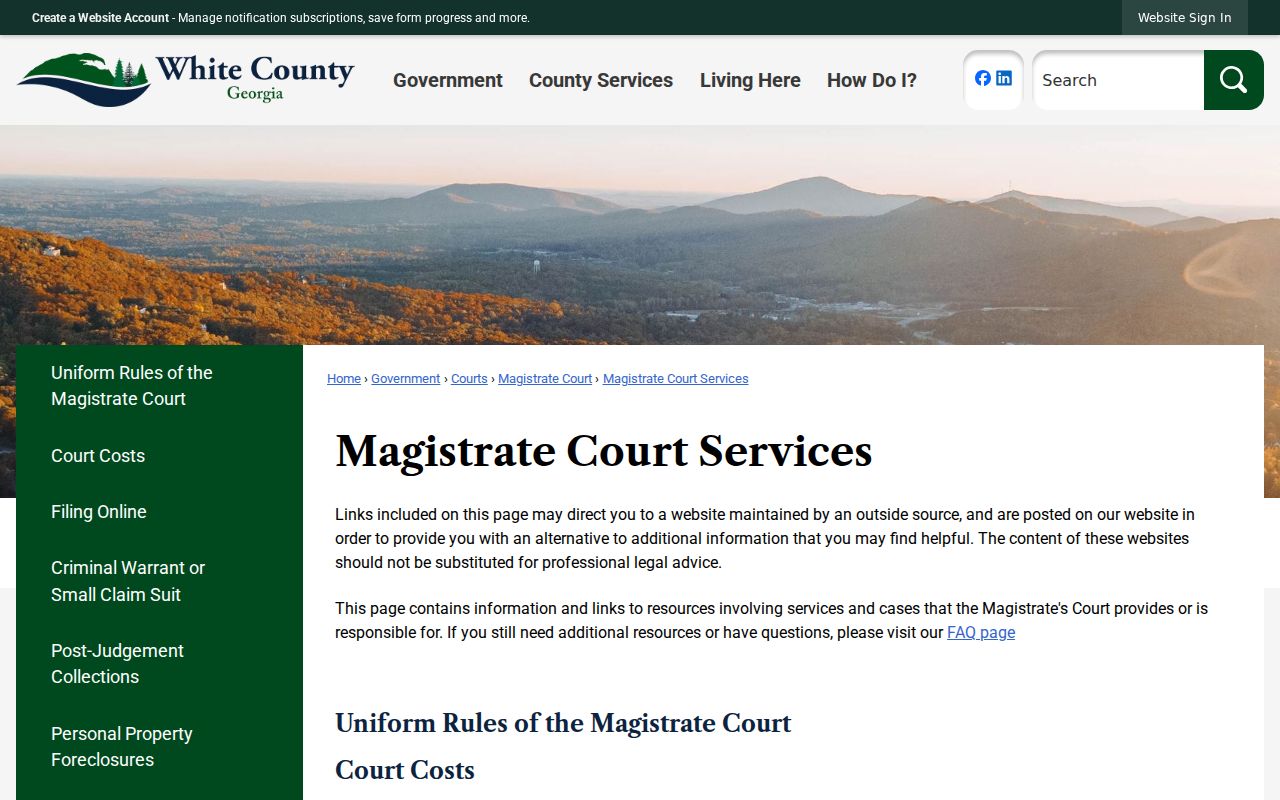
This official route helps distinguish the calendar, filing process, and post-judgment tools instead of treating them as one database.
“Pro se” means a party appears without a lawyer of record. It does not mean court staff may advise that party. White County clerks and judges do not give legal advice or discuss a pending matter outside the proper court process.
What Cases Fill the Civil Docket
White County civil cases span two principal local courts. Superior civil records include matters within the court’s broad jurisdiction. Magistrate civil records focus on claims and proceedings assigned to that limited-jurisdiction court.
- Superior Court equity, divorce, adoption, and title-to-real-property cases
- Magistrate statements of claim and small claims
- Garnishment and dispossessory proceedings
- Personal-property foreclosure and abandoned-vehicle matters
- County-ordinance civil work within Magistrate Court authority
The Magistrate Division says a claim is filed in the county where the defendant resides. That filing rule and the court’s $15,000 jurisdictional ceiling can affect whether White County Magistrate Court is the correct forum.
White County Civil Filing Costs
The county publishes filing and service amounts for several Magistrate civil matters. These sums are not a universal charge for viewing a docket or buying any court record. Costs can also include statutory minimums, surcharges, and service, so confirm the current total before filing.
| Filing or service | Published amount |
|---|---|
| Statement of claim, dispossessory, or garnishment | $61 |
| Sheriff’s Entry of Service | $50 each, except dispossessory service at $25 each |
| Abandoned motor vehicle | $50 |
| Certified final order authorizing abandoned-vehicle sale | $14 |
The White County Court Costs page is the official place to check the published schedule.
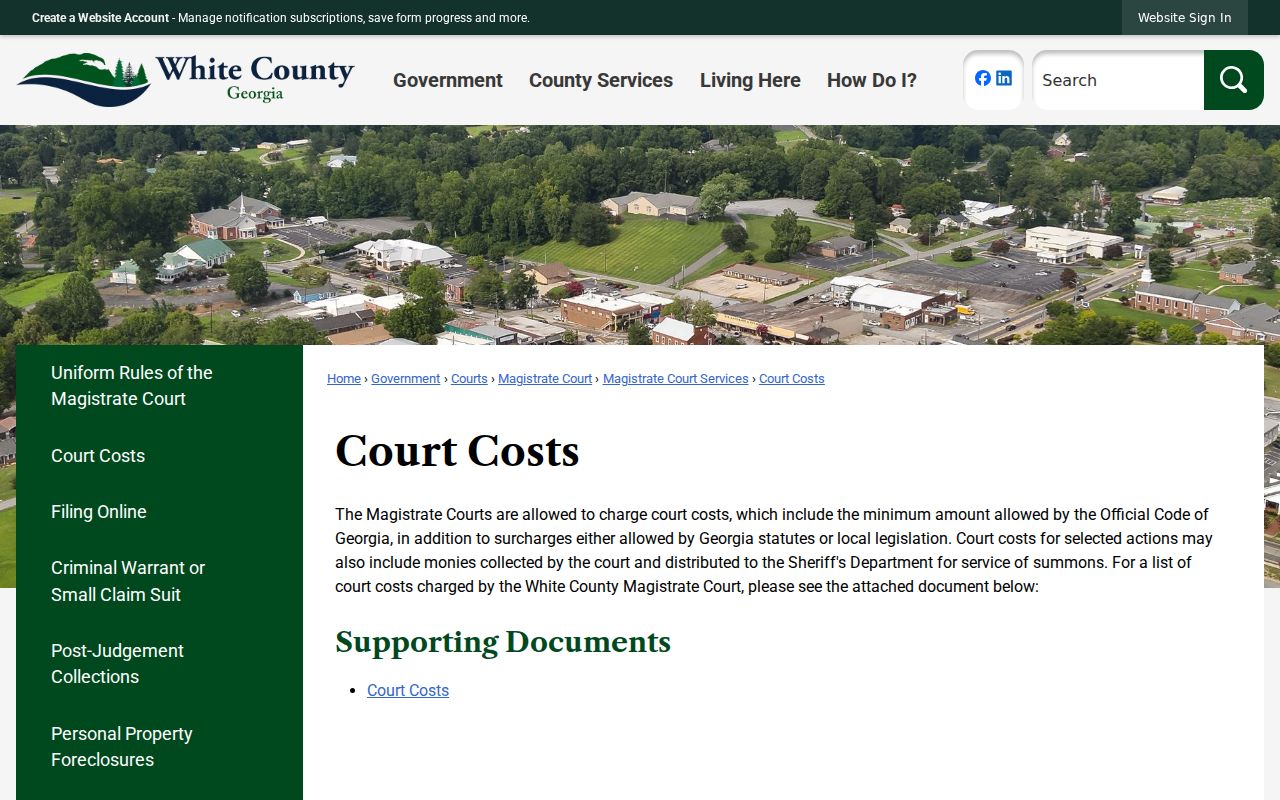
The source image anchors the amounts to the county’s current cost route and reinforces the need to verify changes.
Hearings on the Civil Docket
A White County civil calendar may identify a calendar call, mediation, or bench trial. Each label is a setting type, not a final result. A calendar call organizes pending matters. Mediation is a structured settlement process. A bench trial is heard by a judge rather than a jury.
Superior Court says scheduling for a filed, pending matter runs through the assigned judge’s judicial secretary, subject to notice and timing rules. A phone request cannot bypass those rules. Check the White County court schedule, the latest notice, and the case record. A reset or continuance moves a date, while a signed order states the court’s ruling.
Note: Confirm a critical setting with the court because an archived calendar, closure notice, or emergency order may be superseded.
PeachCourt for White County Civil
Georgia Courts identifies PeachCourt as White Superior Court’s mandatory e-filing provider. The GSCCCA clerk profile also links it for Superior Civil and Magistrate Civil filing. White County says Magistrate claims and answers may be filed through the service.
The PeachCourt provider supports electronic court-document work, but its public search route redirected to login during research.

The login requirement means electronic filing should not be described as a free, anonymous, complete search of every White County civil docket.
Portal distinction: NCourt is linked for post-judgment collection or payment activity. It is not the complete Magistrate civil case register.
Who Can See Civil Dockets
Georgia Superior Court records are generally open for inspection unless law, rule, or a court order limits access. A public docket entry may identify a filing while the document itself remains restricted. Protected identifiers must be masked, and sealed or confidential matters require the lawful court procedure.
White County’s general Open Records form expressly excludes Superior Court, Magistrate Court, and Clerk of Courts records. Civil docket requests should go to the relevant clerk. The Clerk of Court is at 59 South Main Street, Suite B, Cleveland, GA 30528, at 706-865-2613. Magistrate Court’s direct number is 706-865-6636. Ask about inspection, copies, certification, delivery, and current cost.
Key Rules:
Uniform Superior Court Rule 21 governs access, sealing, temporary restrictions, and protected filings in Superior Court.
Georgia Open Records Act guidance explains the general three-business-day response rule and allowable charges for covered agency records, but White County excludes court files from its general form.
O.C.G.A. § 9-11-7.1 and Rule 21.6 restrict protected personal identifiers in court filings.
White County Civil Docket Sources
The official Magistrate Division page identifies local civil work, filing routes, and the direct office channel.
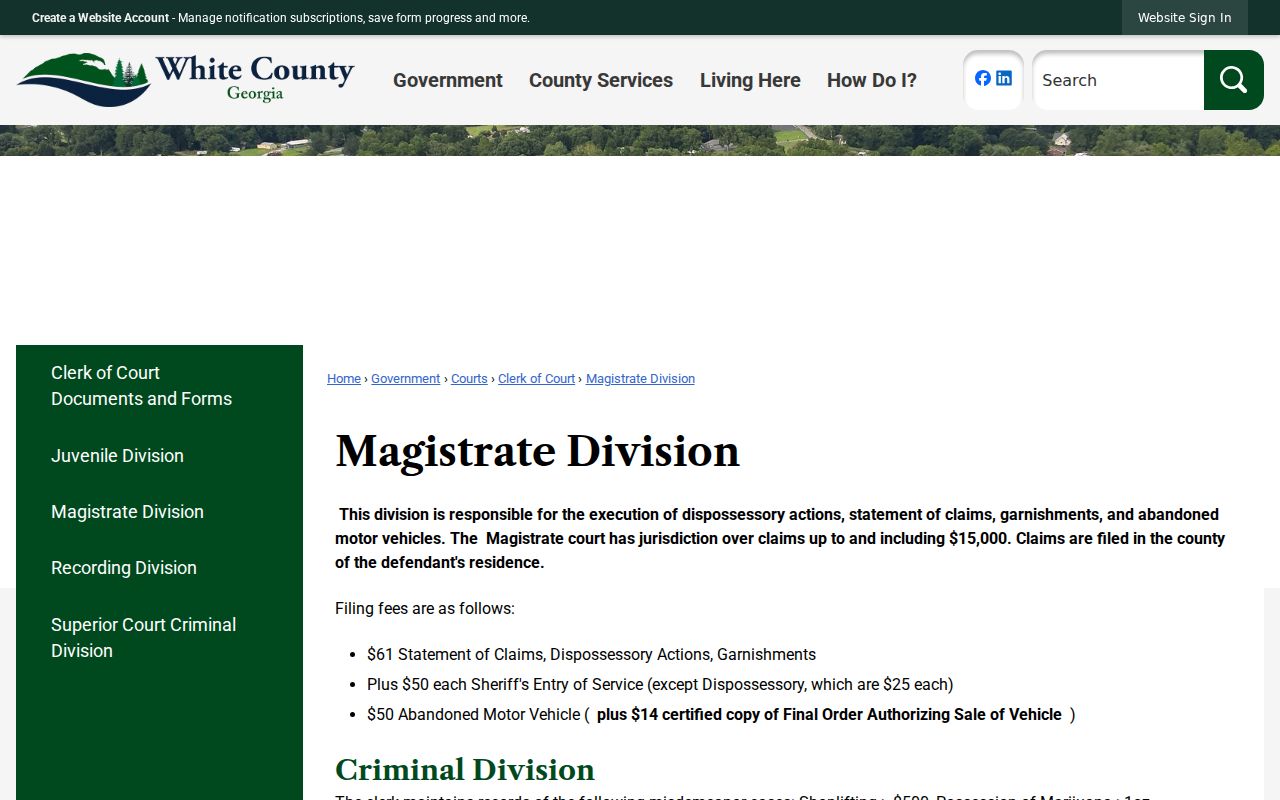
The division source is useful when a small claim, garnishment, dispossessory, or abandoned-vehicle matter does not belong in Superior Civil.
The county also publishes the Uniform Magistrate Court Rules route.
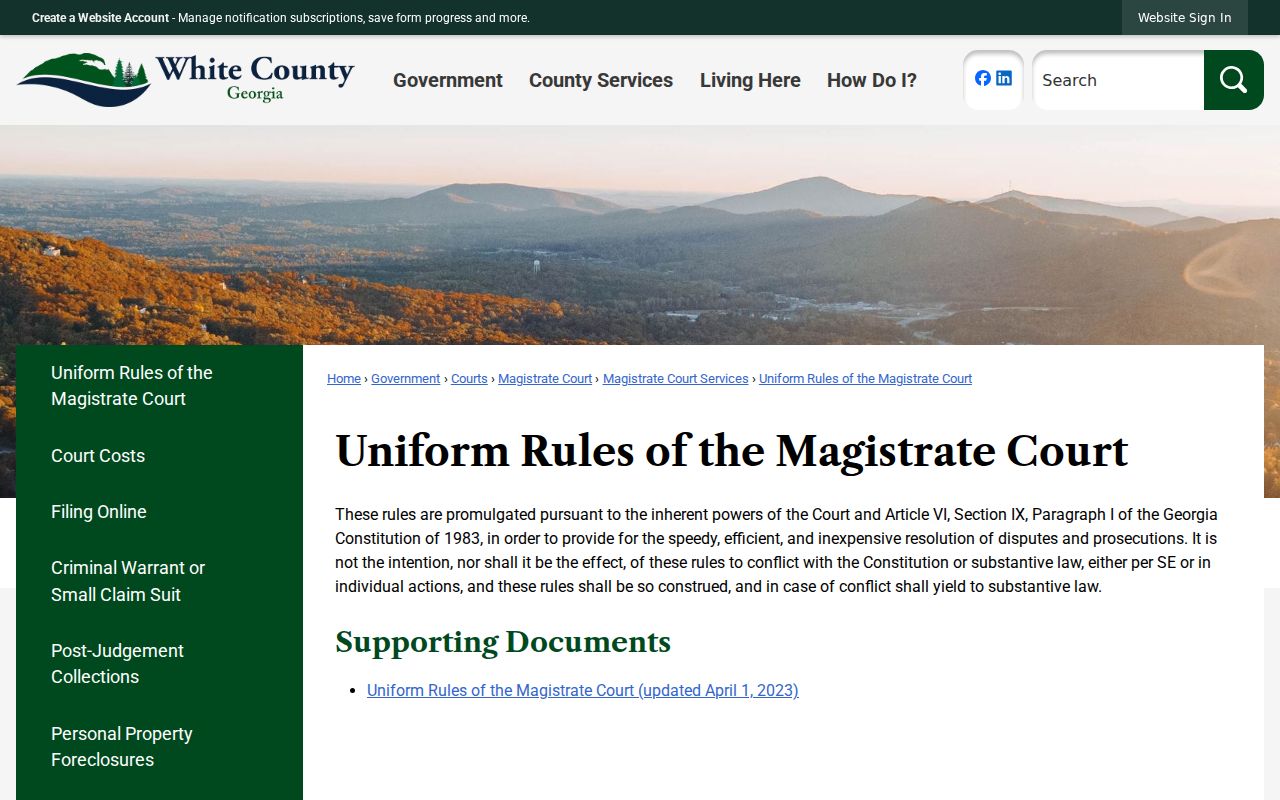
Those rules supply the procedural frame, while the docket and filed orders show what occurred in one White County case.
For a written request, state the court, case number, party names, date range, and exact item. Say whether the need is for the docket, a complaint, an order, a judgment, or a certified copy. This avoids confusing a calendar PDF, payment screen, deed index, and full case file.
Ask how the record will be delivered and whether redaction or certification affects timing. Court staff can identify the correct process and available record, but they cannot interpret a ruling or recommend the next legal step. When a date or result is disputed, rely on the filed order and confirm it with the White County clerk that maintains the original civil case.